
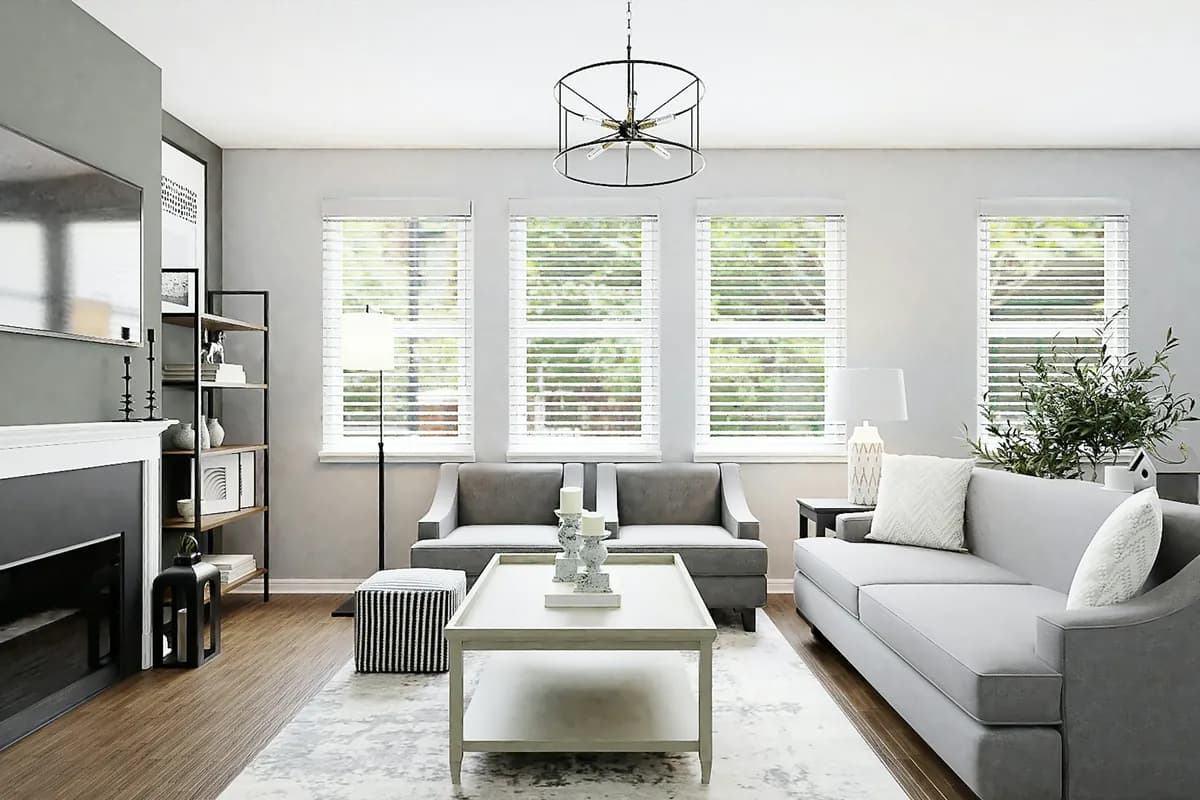
A timeless living room is rarely about expensive pieces. It is usually the result of making decisions in the right order and checking every decision against daily use.
Set function-first zoning and furniture positions
Begin by mapping how the room works during a normal week: conversation, TV viewing, reading, kids' play, and occasional guests. This gives you clear priorities before you choose any decorative elements.
Place the largest seat first, then define a conversation loop around it. Keep circulation paths clean and avoid blocking natural routes to windows, doors, and adjoining rooms.
- Keep major walkways at 80-90 cm minimum
- Place coffee tables 40-45 cm from main seating
- Anchor the seating zone with a rug sized to include at least front legs of all key seats
- Add one reachable side table and one task light for each primary seat
- Confirm TV or focal point alignment before finalizing sofa orientation
Build a controlled material and color hierarchy
Choose one dominant base tone for large surfaces, then layer two supporting textures that introduce warmth and contrast. A consistent hierarchy prevents the room from feeling overdesigned.
If you want variety, vary texture before adding new colors. Linen, timber, wool, and matte metals can add depth while keeping the palette calm and long-lasting.
- Use one dominant neutral for walls and major upholstery
- Select one warm natural texture such as oak, walnut, or woven fibers
- Limit metal finishes to one primary and one secondary finish
- Repeat each key material at least twice across the room
- Reserve high-contrast accents for small movable items
Layer lighting for day-to-night comfort
A timeless room should look balanced at 9 a.m. and still feel inviting at 9 p.m. You get that effect by combining ambient, task, and accent lighting with independent control.
Put brighter light where activity happens and softer light where people unwind. Dimmer control is more valuable than adding more fixtures.
- Provide ambient base light with even coverage and no harsh hotspots
- Add task lighting near reading and work-adjacent seating
- Use accent lighting to highlight art, shelving, or architectural texture
- Install warm dimmable lamps in social zones for evening use
- Test lighting from seated eye level to catch glare
Finish with editing, storage, and seasonal updates
Styling should complete the room, not compensate for weak planning. Keep open surfaces partially empty so the room can breathe and daily life can happen without constant tidying.
Plan hidden storage for high-frequency items such as remotes, chargers, and throws. Controlled storage protects the visual calm that makes a room feel timeless.
- Keep at least 20-30% of shelf and tabletop space intentionally clear
- Use baskets or drawers for visible everyday clutter
- Group accessories in odd-number clusters with varied heights
- Swap small textiles seasonally instead of changing core furniture
- Do a monthly 10-minute edit to remove visual noise
When function, materials, lighting, and styling are handled in sequence, your living room stays practical and polished without frequent redesign.